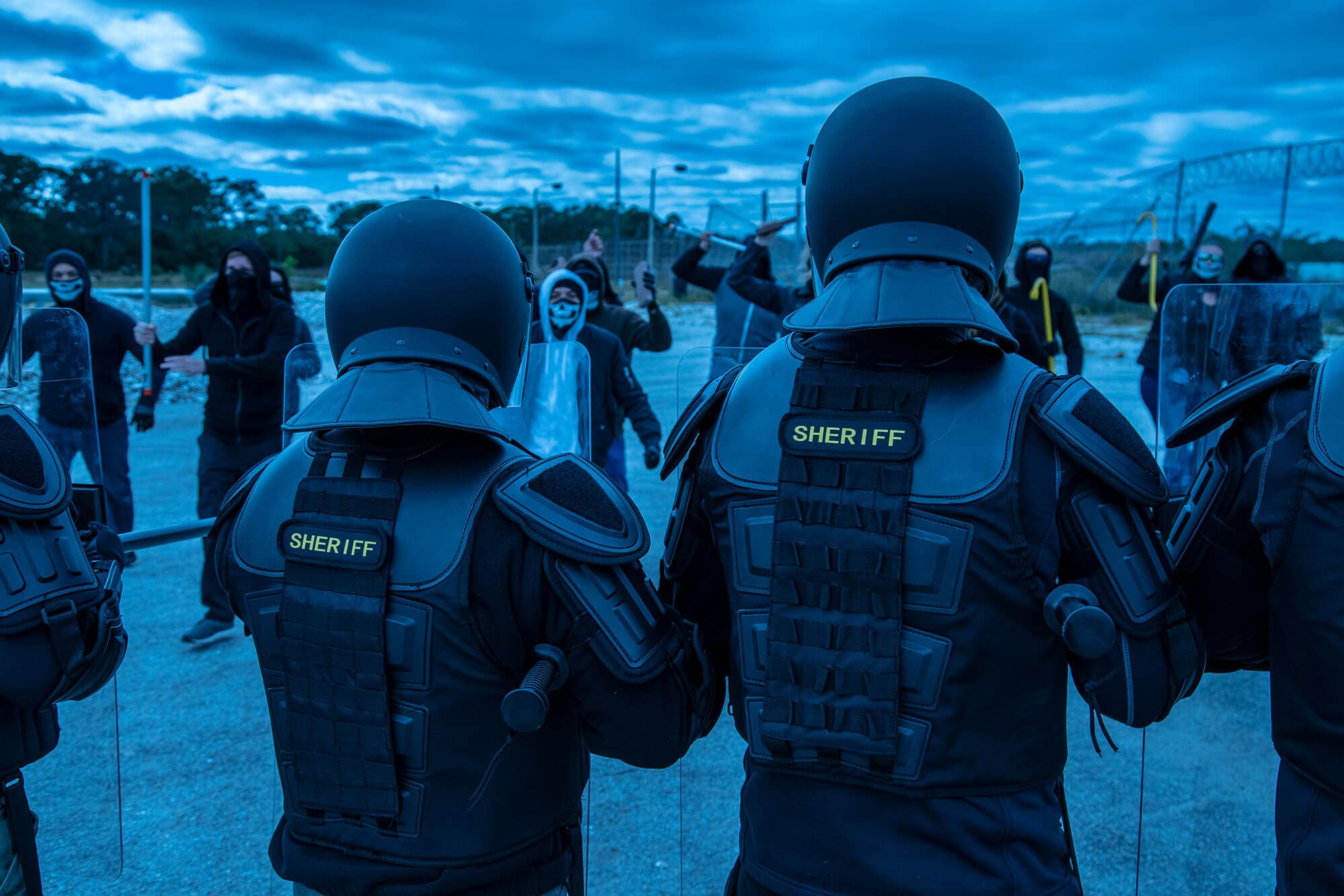
Riot gear exists because crowd control operations are dangerous. Officers face thrown objects, direct physical assault, and the particular hazard of being outnumbered while trying to maintain a position. Proper protective equipment does not eliminate that danger, but it changes the calculus significantly, for officers, for department administrators, and for the communities they serve.
The Real Risks Officers Face
Crowd control operations expose officers to a specific injury profile: head and face injuries from thrown objects, arm and hand injuries from direct strikes, and lower extremity injuries from projectiles and contact with crowds. These are not abstract risks. They are the documented injury patterns that emerge from after-action reports across thousands of incidents.
Officers who are injured in the field do not just bear a personal cost. Their incapacitation changes the tactical situation for everyone around them. A six-officer line with one injured officer is not a five-officer line; it is a line with a gap and a casualty to manage. The operational multiplier effect of keeping officers protected and operational is real.
Head and Face Protection
The riot helmet is the most critical component of a protective kit. Head injuries are the most serious category of crowd control injury, and face shield protection specifically prevents the eye and facial injuries that are among the most permanently debilitating. A proper riot helmet also provides hearing protection and a chin strap system that keeps the helmet in place during physical contact.
Haven Gear offers helmets with both straight and bubble face shields. The bubble shield provides a wider field of view and better peripheral visibility, while the straight shield offers a lower-profile option for departments that prioritize that form factor. Both are built to withstand the projectile velocities associated with thrown objects in crowd situations.
Body and Limb Coverage
A complete suit system covers the torso, arms, and legs with layered protection that absorbs impact before it reaches the officer. Modern suit construction is far lighter and more flexible than the gear of a generation ago. Officers can move, run, and operate without the debilitating fatigue that old-generation gear created over a multi-hour deployment.
The Haven Gear Defender, Enforcer, and Patrol suits are each designed for specific operational contexts. The Defender provides maximum protection for high-intensity operations. The Enforcer balances protection and mobility for general riot deployment. The Patrol suit, which looks like standard attire, is built for patrol and pre-escalation situations where visible riot gear is operationally inappropriate.
Hands and Grip
Gloves close the protection gap at the extremities, where officers are most exposed during physical contact. They also maintain grip on batons, shields, and other equipment in wet conditions. An officer who has lost grip on their equipment because of rain or sweat has lost a meaningful tactical advantage at exactly the wrong moment.
The Confidence Factor
Properly equipped officers make better decisions. This is not speculation; it is consistently reported in officer surveys and supported by tactical psychology research. An officer who is confident in their protection is less likely to escalate prematurely out of fear and more likely to maintain a controlled, professional posture under pressure. Gear quality affects mindset, and mindset affects outcomes.