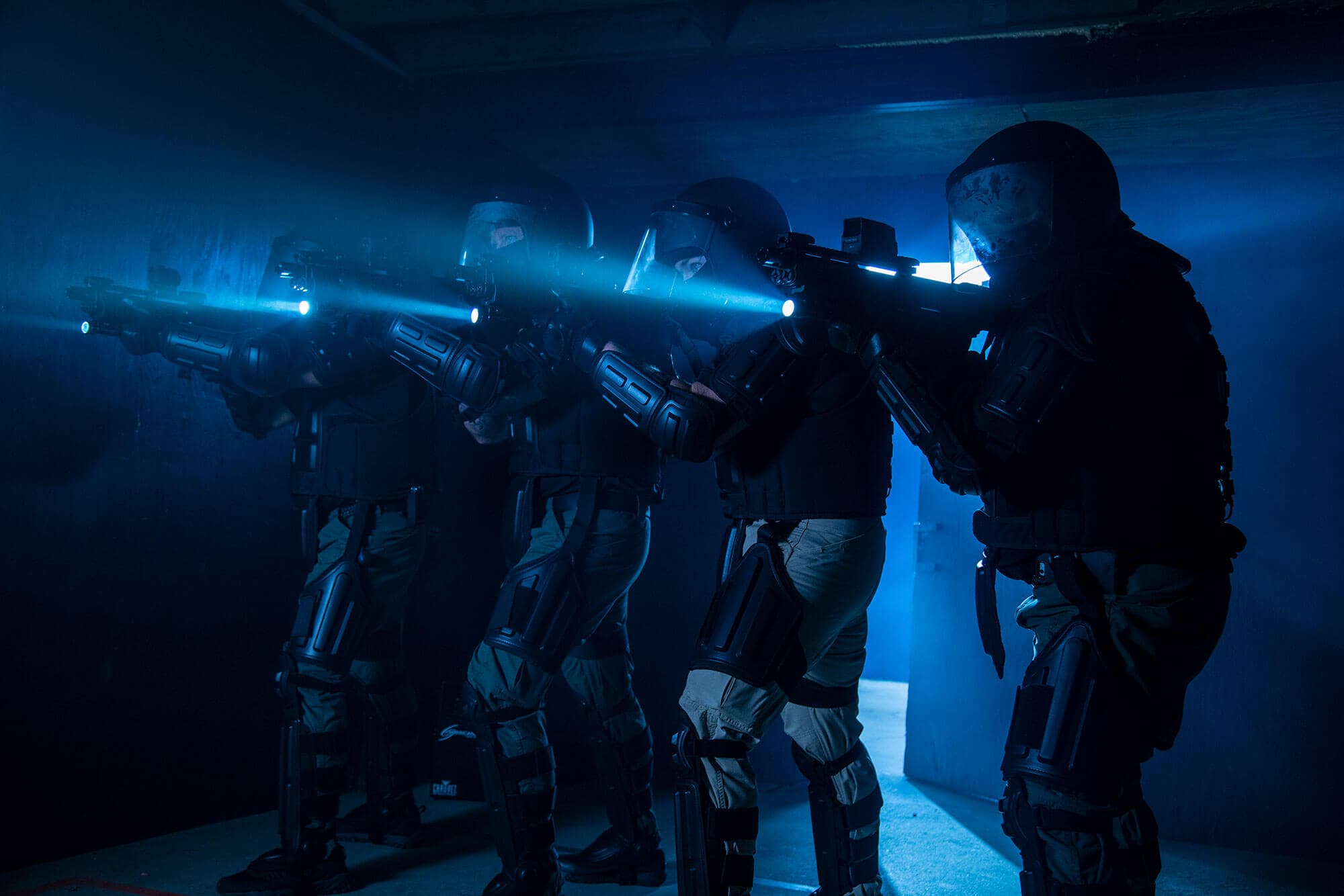
Riot gear procurement is not just a product decision. It is a vendor relationship decision. The company you choose becomes a partner in keeping your officers equipped and supported over the lifecycle of the gear you purchase. A vendor with the right product but poor support infrastructure will cost your department more in the long run than a slightly more expensive vendor who gets the relationship right. Here are five criteria that matter beyond the spec sheet.
1. Do They Offer a Genuine T&E Program?
A vendor confident in their product offers field evaluation before purchase. A T&E program is not a sales demo. It is a commitment to let your officers actually use the gear in operational conditions and make a purchasing decision based on that experience. Vendors who resist this or only offer controlled demonstrations have something to hide about how their gear performs in practice.
The T&E program should include real gear in operational configurations, not a curated selection of best-case products. It should also include support during the evaluation: someone available to answer questions, address fit issues, and gather feedback. A brochure dropped on your doorstep is not a T&E program. Haven Gear's T&E program ships configured kits and stays engaged throughout the evaluation.
2. Can They Scale to Your Department?
Some vendors can outfit a team of twelve. Others can support a statewide agency with hundreds of officers across multiple configurations. Know what your needs are across current purchase, future growth, and replacement cycle, and verify that the vendor has the manufacturing and inventory capacity to support them. A vendor who can barely fulfill your first order will not be reliable for ongoing replacement and maintenance needs.
Police Chief Magazine has reported on supply chain issues in law enforcement equipment procurement, noting that departments with established vendor relationships and pre-qualified contracts fare significantly better during supply disruptions than those shopping each procurement independently.
3. Do They Have Real Law Enforcement Expertise?
There is a meaningful difference between a company that designs riot gear with law enforcement input and one that manufactures protective equipment and adapted it for law enforcement. The former understands operational context: how gear gets used, what fails in the field, what officers actually need versus what looks good in a catalog. The latter may produce technically compliant products that miss the practical realities of how officers work.
Ask vendors how they develop and refine their products. Who do they talk to? Have they conducted formal field evaluations with law enforcement agencies? Do they have officers on their advisory process? The answers reveal whether the expertise is real or assumed.
4. What Does Their Warranty and Parts Availability Look Like?
Gear that cannot be repaired or replaced promptly becomes a budget problem. Ask specifically about parts availability, not just whether they offer warranty coverage, but how long it takes to receive replacement components, whether they maintain stock, and what the process looks like for warranty claims. A two-year warranty is not valuable if the parts to fulfill it are backordered by six months.
Haven Gear maintains replacement parts inventory specifically to support prompt warranty fulfillment. We designed our gear to be maintainable. Individual components can be replaced without replacing the entire system, which reduces the lifecycle cost of your investment and keeps officers equipped during the replacement process.
5. Do You Have Direct Access to the Team?
When you have a problem, whether a fit issue before a deployment, a question about configuration, or a damaged component that needs emergency replacement: who do you call? A vendor with a dedicated account relationship and a team you can reach directly is categorically different from one that routes everything through a general support queue. Law enforcement procurement operates under time constraints that general customer service processes were not designed for.