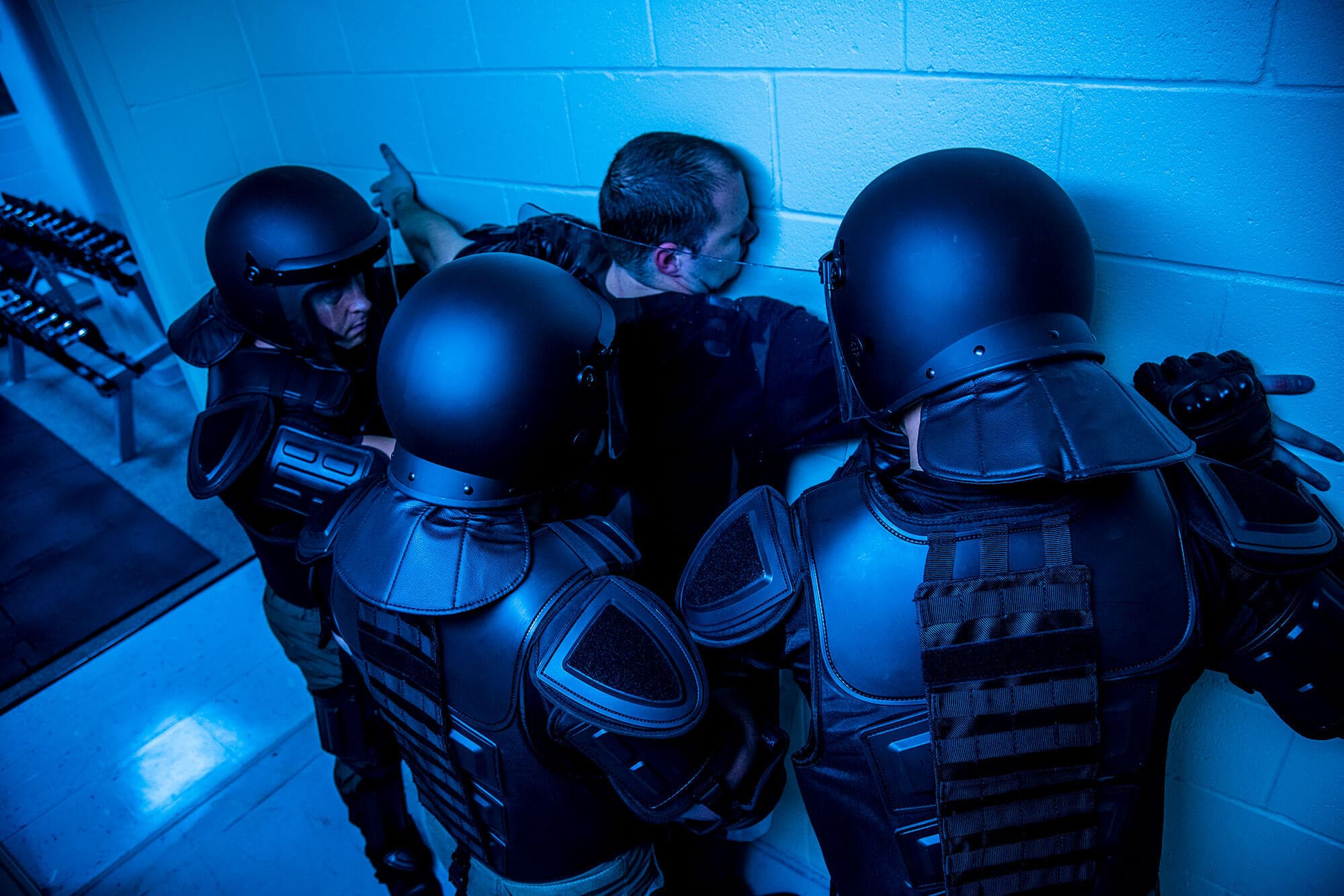
Riot gear does not fail all at once. It degrades gradually through foam compression, stitching fatigue, face shield micro-fractures, and shell deformation, until the protection it provides is meaningfully less than what it was when new. The problem is that degraded gear often looks fine in a locker-room inspection. Knowing what to look for requires more than a visual check.
Age Is Not the Only Factor
A common department standard is to replace gear on a fixed schedule, such as every five or seven years. Calendar-based replacement is a reasonable policy, but it misses the actual question: what is the current condition of the gear, and does it still perform to spec? Gear used in a dozen deployments over three years may need replacement sooner than gear stored carefully and used rarely over six years.
Corrections1 has documented cases where facilities continued using protective equipment well past its effective service life because replacement had not been budgeted, with predictable consequences when incidents actually occurred. Condition-based replacement, not calendar-based, is the right framework.
Physical Signs of Degradation in Suits
For suit systems, the primary indicators of degradation are foam compression, stitching integrity, and closure function. Foam that has been compressed by repeated impact or simply aged loses its energy-absorption capability. It no longer slows an impacting force; it just transmits it. Press firmly on all padded areas. If the foam feels hard or does not spring back, it is no longer performing.
Check all stitching at high-stress points: joint connections, closure attachments, and strap anchor points. These fail from the inside out. They may look intact while the underlying thread has lost tensile strength. Pull firmly on straps and closures. Any give at anchor points indicates structural failure.
Face Shield Condition
Polycarbonate face shields develop micro-fractures from UV exposure, impact events, and cleaning solvent contact that are not always visible without close inspection. Hold the shield up to a light source and look for crazing: a fine network of surface cracks that indicates the material has lost ductility. A crazed shield will shatter rather than flex under impact, which is categorically different from a shield that is performing correctly.
Any shield that has taken a significant impact, even if it appears undamaged, should be replaced before the next deployment. The impact may have initiated internal fractures that are not visible on the surface.
Making the Case to Administration
Equipment replacement budgets compete with everything else a department needs. The strongest case for replacement is documentation: photographs of degraded components, a written condition assessment against manufacturer standards, and incident data that demonstrates the risk profile of the operations the gear is expected to support.
Haven Gear can support departments in this process by providing condition assessment criteria and comparative specifications that document what current-generation gear provides versus equipment that is past its effective service life. Reach out to our team if you are building a replacement case for your administration.